Non-Obstante Provisions in Statutes

Legislations are intended to address issues involving specific subject matter. A right granted under one legislation may be affected by the provisions of another legislation. A logical question that follows is – which provision would prevail? The obvious answer is that the legislation dealing with the specific subject matter should prevail over general legislation.
Providing Personal Data: An Overview under Digital Personal Data Protection Act, 2023

The Parliament of India passed The Digital Personal Data Protection Act, 2023 (‘Act’) on August 11, 2023. The Act recognises the right of individuals to protect their personal data and the need to process such personal data. This write-up enquires into the manner in which personal data is to be shared by an individual while also discussing the manner in which entities may process this personal data.
Water

‘Water’ or ‘H2O’ is two hydrogen atoms hooked to an oxygen atom. So, what is the much-talked-about water problem? Can we not solve all the water problems with a bit of chemistry? Right, we can. However, in linking the electrons of the atoms to make water, there will be a vast and sudden burst of energy because hydrogen is highly flammable, and oxygen supports combustion.
Exercise of Intellectual Property Rights and Abuse of Dominance

Intellectual Property Rights (‘IPRs’) are rights in relation to ‘intellectual property’, whether contractual or under the statute. Intellectual property (‘IP’) refers to creations of the mind, such as inventions; literary and artistic works; designs; symbols, names and images used in commerce.[1]
The Information Technology (Intermediary Guidelines and Digital Media Ethics Code) Rules, 2021: Focusing on the 2023 Amendment

The Information Technology (Intermediary Guidelines and Digital Media Ethics Code) Rules, 2021 (‘2021 Rules’)[1] were released by the Central Government in February 2021. The 2021 Rules are framed further to the exercise of powers by the Government of India under Section 87(2) of the Information Technology Act, 2000. The 2021 Rules have now been amended vide Information Technology (Intermediary Guidelines and Digital Media Ethics Code) Amendment Rules, 2023. (‘2023 Amendment’).
Indian Carbon Market: Prospects and Challenges
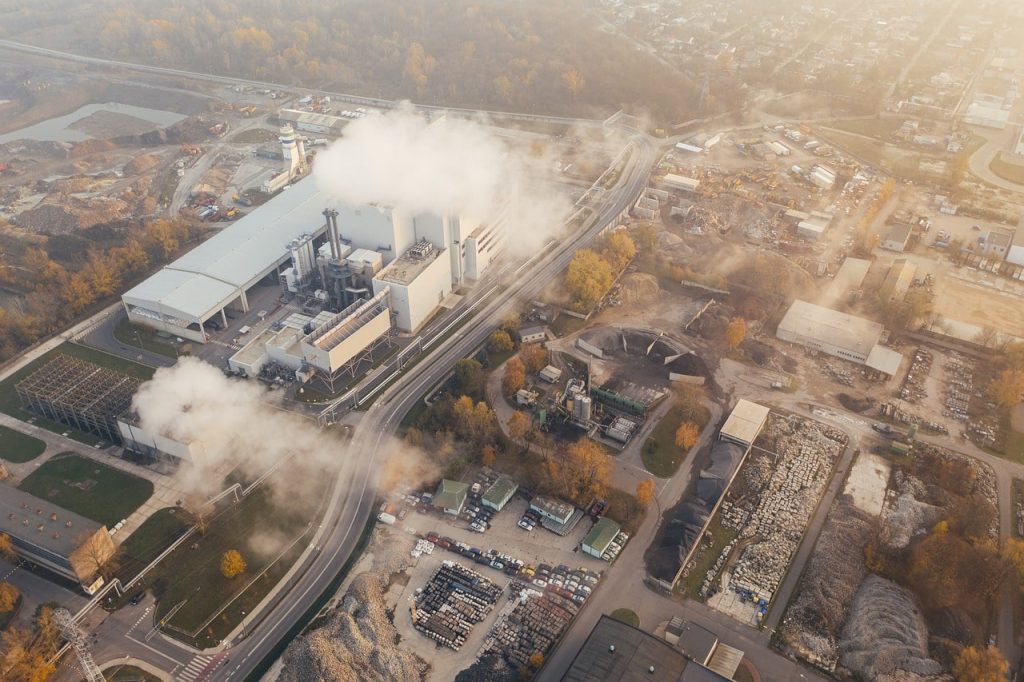
Climate change is one of the biggest problems humanity faces in today’s day and age. This issue’s urgency and importance have led nations to tackle it. The heavy reliance and over-exploitation of fossil fuels have led to irreversible changes across the globe, and it is the need of the hour to, at the very least, stop further exploitation of these resources.
Renewable Energy and Biodiversity – Legal Framework

With the increasing reliance on renewable sources of energy, India is leaving no stone unturned to fulfil the targets set forth by it in COP26. This rapid transition to renewable energy is causing an irreversible impact on biodiversity which merits adequate attention from relevant quarters. This article seeks to map the effect of growth in renewable energy infrastructure on biodiversity and the legal framework in this regard.
Towards Regulating the Digital Market

The government appointed a 16-member committee on Digital Competition Law[1] under the Ministry of Corporate Affairs to draft the “Digital Competition Act”. To start the process, the Standing Committee on Finance presented a report[2] on “Anti-Competitive Practices by Big Tech Companies”. The report was adopted on December 19, 2022. The Committee report proposed ex-ante regulations, a new digital competition law to curb anti-competitive practices in digital markets in India.[3]
Renewable Energy Certificates: What, Why & How?

The renewable energy certificate (REC) incentivizes renewable energy producers (RE). India took this initiative to develop the RE market over a decade ago. Pan-India market-based Renewable Energy Certificate (REC) Mechanism was introduced in the year 2010 under the Electricity Act 2003 (“EA 2003“) and the National Tariff Policy 2006 (“Tariff Policy 2006“) to address the mismatch between the availability of Resources and the requirement of the obligated entities to fulfil their renewable purchase obligation (RPO).
International Cooperation in Space Laws

The need to observe the Earth’s climate plays a crucial role when the goals set by UNFCCC (United Nations Framework Convention on Climate Change) are the target. No single agency or State alone can address the far-reaching needs of monitoring Earth’s climate. Hence international cooperation is essential for the system of an operational Global Climate Observing System (GCOS).
Mandatory Use of Government e-Marketplace (GeM) and Competition Law

The Indian Government has been actively promoting the use of its online procurement portal, the Government e-Marketplace (GeM), as a means to promote transparency, efficiency, and cost savings in public procurement. To further encourage the use of GeM, the government has made it mandatory in certain situations, for all Central Government Departments and Public Sector Undertakings to procure goods and services through GeM.
Authorization and Declaration of Natural Gas Pipelines

Natural Gas Pipelines are, without a doubt, critical infrastructure. A robust pipeline infrastructure is necessary to ensure efficient delivery of natural gas to its industrial users and consumers. For more reasons than one, it is crucial to ensure that pipeline infrastructure is accessible to large numbers and redundancy is avoided.